Yarnation: Unravel Flow
- 4.6
- Rating
- 100.00K
- Installs
- Free
- Price

 Analysis by App-foxy
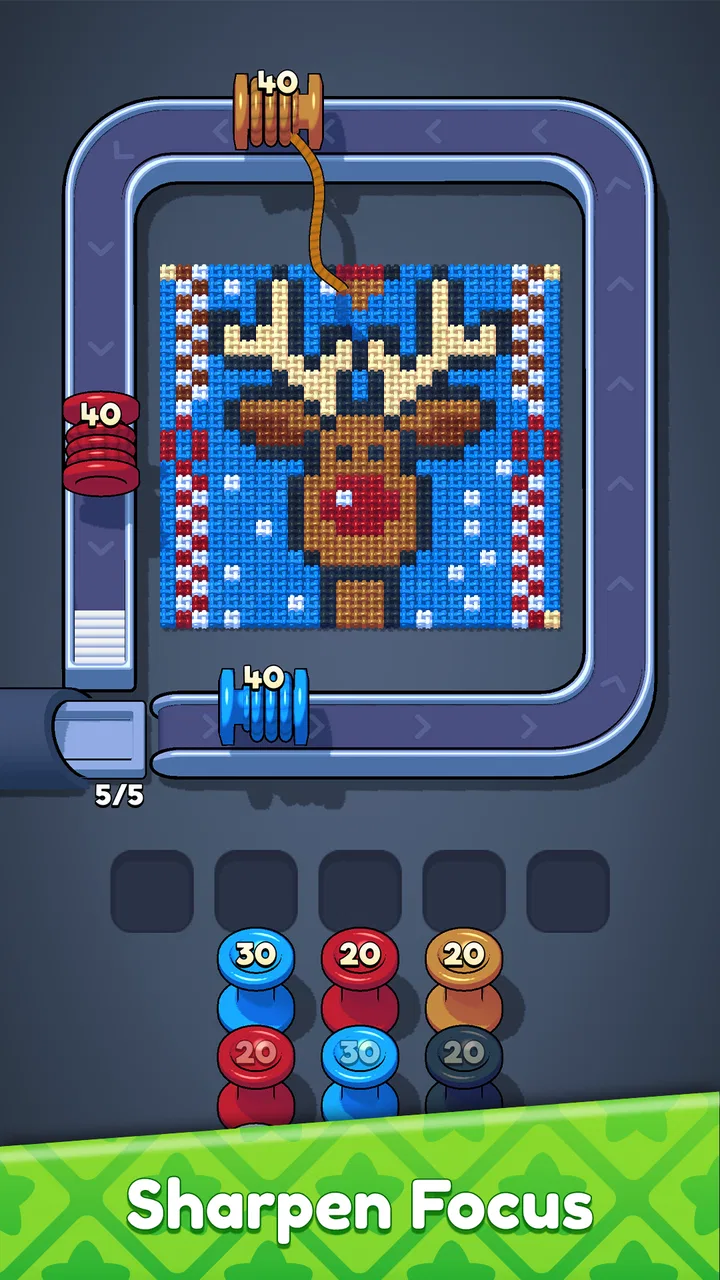
I spent time with Yarnation: Unravel Flow as a puzzle game built around one clear idea: sorting tangled yarn until a knitted pattern becomes understandable again. That focus gives it a gentler personality than many mobile puzzles. Instead of matching bright tiles or racing a timer, I found myself studying strands, tracing where they seemed to go, and making small decisions that gradually opened up the whole design.
The game comes from Unico Games Studio and is free to start, with optional in-app purchases ranging from $1.99 to $89.99 per item. It is rated for Everyone, works on Android 6.0 and later, and its current version is 1.001. The store summary describes smart yarn sorting puzzles, but the more useful way to understand it is as a visual untangling exercise: progress depends less on quick reactions and more on reading a crowded pattern correctly.
Why the yarn-sorting idea matters
The most important capability here is not simply moving colored strands. It is the way the game turns a messy knitted arrangement into a sequence of manageable choices. When several lines overlap, the immediate temptation is to pick the color that looks easiest. In my experience, that is not always the best move. A strand that appears simple may be blocking the route of another, while a less obvious choice can clear a much larger portion of the design.
You May Also Like

 Blood Strike: 2.5 Anniversary
Blood Strike’s Loadouts Turn Every Drop Into a Tactical Gamble
A close look at Blood Strike’s custom loadouts: how fast access to signature weapons reshapes its battle royale rhythm, rewards preparation, and narrows the gap between fights.

 Pandora - Music & Podcasts
Pandora’s Music Is Easy to Start, but Harder to Recover
Pandora’s strength is its low-effort path from a seed to a station. Its weak spot is how much confidence it asks you to place in connection, setup, and quiet recovery.

 8 Ball Pool
 Is Built on Rivalries, Rematches, and Routine
A close look at the rivalries, rematches, shared routines, and unanswered safety questions that turn a quick pool match into a persistent mobile community.

 Samsung Music
’s Quiet Strength Is Playing What You Already Own
Its reach comes less from spectacle than from dependable access to a personal library. That simplicity is both the app’s strongest retention engine and its ceiling.

 AccuWeather: Weather Radar
AccuWeather Review: A Quick, Clear Forecast for Everyday Decisions
For everyday plans, the best forecast is the one you can understand quickly. AccuWeather makes rain timing, radar, and local conditions easy to act on, with a few trade-offs.

 Hill Climb Racing
Why Hill Climb Racing Still Turns Crashes Into One More Run
A tiny car, a bumpy hill and one more upgrade: Hill Climb Racing keeps resurfacing because its simple chaos makes every near-miss feel personal.
More From Our News Desk
View All News


That makes the central puzzle feel closer to visual planning than ordinary color matching. I am not only asking, “Which yarn matches?” I am also asking, “Which piece will reveal the next useful option?” This small change has a real effect on the pace. Each move becomes a chance to improve the board’s visibility, rather than a button press made on instinct.
The strongest part of Yarnation: Unravel Flow is the gradual reveal of order inside visual clutter. The satisfaction comes from seeing a pattern lose its knots and crossings one decision at a time. That is a different reward from clearing a row or beating a score. It feels more like solving a compact spatial problem, which is why the game can work well when I want something quiet but still mentally active.
The knitted theme also gives the puzzles a recognizable identity. Many mobile puzzle games use abstract blocks, jewels, or numbered pieces. Here, the strands themselves are the problem. Their direction, overlap, and position matter, so the screen is not just a collection of interchangeable objects. I have to look at the whole arrangement before committing to a move.
Reading the board before touching it
My most useful habit was to pause briefly at the beginning of a puzzle. Rather than immediately selecting the first visible yarn, I looked for strands that seemed to sit above others and for colors that appeared to have fewer obstacles around them. This is a simple routine, but it changes the experience from trial and error into deliberate sorting.
When the layout feels crowded, I recommend identifying one small area that can be made clearer. Trying to understand every crossing at once is tiring and often unnecessary. A better approach is to choose a likely opening, follow its consequences, and then reassess the board after the visual clutter has reduced. The game rewards that flexible rhythm more than a rigid plan made before the first action.
Another useful technique is to avoid treating the most prominent color as the priority. A large or bright section can draw attention, but the real key may be a quieter strand near an edge. Clearing that smaller obstruction can expose several later choices. This is one of the non-obvious lessons I took from the game: visual prominence and strategic importance are not always the same thing.
I also found it helpful to think in terms of access rather than completion. Instead of asking which strand I want to finish, I ask which move gives me access to more of the board. That distinction matters when several possible actions look equally safe. The move that creates the most information is often more valuable than the move that simply removes one visible piece.
What a normal play session feels like
In everyday use, I would place this game in the short-break category. It suits the moment when I have enough attention for a puzzle but do not want a long story, a competitive match, or a complicated ruleset to remember. I can open it, study a pattern, and settle into a focused loop without needing a large amount of preparation.
A realistic scenario would be a quiet wait before an appointment. I might begin with the intention of playing briefly, then spend the first few moments examining the yarn layout rather than rushing. If I make a poor choice, the frustration comes from my reading of the board, not from fast controls or an opponent’s move. That makes the game feel personal: I can usually identify the moment when I stopped observing and started guessing.
It also works as a wind-down activity because the visual theme and sorting premise feel less aggressive than many alternatives. I would not call it completely effortless, though. A difficult arrangement can demand sustained concentration, especially when several strands appear to compete for the same space. The calm presentation does not remove the need to think.
For younger players, the Everyone rating makes the game broadly accessible, and the basic idea is easy to explain: sort the yarn and uncover the pattern. However, accessibility of rules is not the same as equal difficulty for every age. A child may understand the objective quickly but still need patience to inspect crossings and avoid impulsive choices. I would treat it as a puzzle to explore together rather than assume every player will find it immediately simple.
How it compares with familiar puzzle choices
Compared with match-three games, this is less about creating immediate combinations and more about understanding position. Match-three play often encourages scanning for a quick opportunity, while the yarn puzzles ask me to consider what a move will expose. If I enjoy chain reactions and constant visual rewards, a traditional match-three title may feel livelier. If I prefer a board that rewards careful observation, this approach is more satisfying.
It also differs from word puzzles. Word games test vocabulary, spelling, or deduction through language, whereas Yarnation: Unravel Flow communicates almost everything visually. That makes it a better fit when I want to think without reading much. On the other hand, players who enjoy the precision of clues and the certainty of a correct word may find yarn sorting more open-ended and less intellectually verbal.
Compared with physics-based untangling games, the knitted presentation gives the challenge a more crafted feel. The appeal is not watching objects swing or collide; it is making sense of overlapping strands as a designed pattern. That can be a strength for players who like visual order, but it may feel restrained to anyone looking for dramatic motion or a strong action element.
The free entry point makes it easy to test whether this particular kind of puzzle suits you. I would still keep the purchase model in mind. Optional items range from $1.99 to $89.99, so anyone who prefers a completely purchase-free experience should be comfortable ignoring the shop rather than assuming every available option is essential. The game is best approached first as a free puzzle experience, with spending treated as a personal choice rather than part of the core reason to install it.
The tradeoff between calm design and mental friction
The same narrow focus that gives the game its identity can also limit its appeal. Yarn sorting is a specific taste. If I want varied puzzle formats, narrative progression, or a broad collection of mechanics, this may feel too centered on one visual idea. Its strength is concentration, not variety across unrelated systems.
There is also a difference between relaxing presentation and relaxing decision-making. I found the theme inviting, but a tangled arrangement can still produce genuine frustration when I misread which strand is accessible. The game does not need speed to create pressure; uncertainty is enough. Players who dislike restarting their thought process after an incorrect move may prefer a more forgiving puzzle style.
Another tradeoff is that visual clarity becomes especially important. Because the challenge depends on following strands through overlaps, a distracting environment or a small screen can make careful reading harder. I would play with the display unobstructed and avoid treating the game as something to operate while doing another task. It is casual in format, but it rewards giving the board a few seconds of full attention.
The version number, 1.001, also suggests that I would keep expectations practical rather than assume a huge, fully established puzzle ecosystem. The game already has an average rating of 4.6 from around 3.2 thousand ratings and more than 100 thousand installs, which shows that it has found an audience. Still, I would choose it for the core yarn-sorting experience itself, not because I expect it to replace every other puzzle game on my phone.
That distinction is important when deciding whether to install it. A player who wants a dependable visual brain break may get exactly what they need. Someone searching for extensive social competition, deep customization, or a constantly changing set of genres should look elsewhere. I would skip it if the thought of examining tangled lines sounds more tedious than satisfying.
Small habits that make the puzzles easier to read
My first practical tip is to use a two-pass approach. On the first pass, I look only for obvious obstructions and possible starting points. On the second, I consider the consequences of those choices. This prevents me from spending too much effort predicting the entire solution before the board has changed.
My second tip is to protect useful visibility. If a move clears one strand but leaves the remaining pattern just as confusing, it may not be the best opening. I prefer actions that separate areas of the design or make several neighboring strands easier to follow. The benefit is not merely progress; it is better information for the next decision.
My third tip is to slow down after a successful move. It is easy to carry the confidence of one correct action into a careless second action. I found that pausing after the board changes helps because newly exposed yarn can alter the priorities completely. The best next move is often different from the move I expected before the previous one.
A fourth useful habit is to treat mistakes as information. If a choice creates a more confusing layout, I can learn which visual assumption was wrong: perhaps I followed the visible end instead of the obstructing strand, or perhaps I prioritized color over position. That mindset makes the game less about flawless play and more about improving how I inspect the pattern.
Who gets the most from this particular game
I would recommend it most strongly to people who enjoy visual organization, gentle deduction, and puzzles that become clearer through patient observation. It is a good match for someone who likes the feeling of sorting a drawer, untangling cables, or restoring order to a cluttered workspace, but wants that experience in a compact game format.
It may also suit players who are tired of puzzle games built around speed. The yarn premise gives me room to think about structure instead of reacting to a countdown or competing against another player. That makes it useful for a short mental reset during the day, provided I am willing to give the screen focused attention.
I would be more cautious about recommending it to someone who needs constant novelty. The game’s appeal comes from refining one central activity, not from jumping between radically different challenges. I would also point fast-action fans toward another category, because sorting strands will not provide the immediate intensity of an arcade or competitive title.
For families, the Everyone rating is reassuring as a starting point, and the simple objective is easy to demonstrate. I would still encourage adults to play a few puzzles alongside younger users, especially to show the difference between selecting the most visible yarn and selecting the yarn that improves access to the rest of the pattern. That small explanation can make the game feel less like random clicking.
My final take after following the strands
Yarnation: Unravel Flow succeeds because it commits to a recognizable puzzle identity. The knitted patterns are not just decoration; they shape how I inspect the board, plan a move, and judge whether a choice has genuinely improved the situation. The experience is quiet, visual, and more thoughtful than its simple premise may initially suggest.
It is not the right choice for every puzzle fan. Players who want words, rapid matches, competition, or a wide spread of mechanics will probably find stronger alternatives elsewhere. The optional purchase range also means I would approach the free download with a clear personal spending limit and focus first on whether the basic sorting loop holds my attention.
For me, the deciding strength is the way each successful action creates understanding. I am not merely removing pieces; I am learning how the pattern is organized. If that kind of slow visual discovery sounds appealing, this free game from Unico Games Studio is worth trying on a compatible Android device. Its 4.6 average and growing audience make sense to me—not because it tries to do everything, but because it turns one focused idea into a satisfying little act of untangling.
FAQs for Yarnation: Unravel Flow
01What is Yarnation: Unravel Flow and how is the gameplay structured?
Yarnation: Unravel Flow is a relaxing puzzle game focused on untangling and reorganizing flowing lines. The main objective is to guide or separate paths until the visual pattern is resolved, usually by making careful moves rather than reacting quickly. Its simple controls make it easy to start, while later puzzles require more planning, patience, and attention to detail.
02Is Yarnation: Unravel Flow suitable for beginners and casual players?
Yes, the game is designed to be approachable for casual players, including people who do not usually play puzzle games. The early stages generally introduce the basic mechanics gradually, allowing you to understand how the lines, paths, or connected elements behave. However, the difficulty can increase as you progress, so later levels may require experimentation and several attempts before you find the correct solution.
03Does Yarnation: Unravel Flow require an internet connection to play?
The core puzzle experience appears suited to short, relaxing play sessions, but the exact offline functionality can depend on the version installed and how the developer handles advertisements, updates, or online services. It is advisable to open the game once while connected to the internet and check whether levels remain accessible in airplane mode. An internet connection may still be needed for ads, purchases, analytics, or support features.
04Are there advertisements or in-app purchases in Yarnation: Unravel Flow?
Before downloading, users should check the current store listing for the most accurate information about advertising and optional purchases, since monetization can change through updates. Puzzle games of this type may include ads between levels or offer purchases to remove advertisements, unlock content, or provide hints. Review the payment details carefully, especially if children may use the device, and disable purchases where necessary.
05What devices are compatible with Yarnation: Unravel Flow, and is it free to download?
Compatibility depends on the Android or iOS version available in your region, as well as the minimum operating-system requirements listed on the official store page. The game may be free to install while offering optional advertising or paid features. Before downloading, confirm that your device has enough storage, supports the required operating system, and meets any stated hardware requirements for smooth performance.
Pros
- Relaxing flow puzzles with a calm
- low-pressure gameplay style.
- Simple controls make it easy to start playing without a tutorial.
- Short levels fit well into quick breaks or casual sessions.
- Gradual difficulty provides a smooth learning curve for new players.
- Minimalist presentation keeps attention focused on solving each puzzle.
Cons
- Later puzzles can feel repetitive if you play for long sessions.
- Some solutions may rely more on trial and error than clear logic.
- Limited gameplay variety may reduce its long-term replay value.
- Progress can feel slow for players seeking faster challenges.
- Ads or optional purchases may interrupt the otherwise relaxing experience.

Yarnation: Unravel Flow
Gallery